
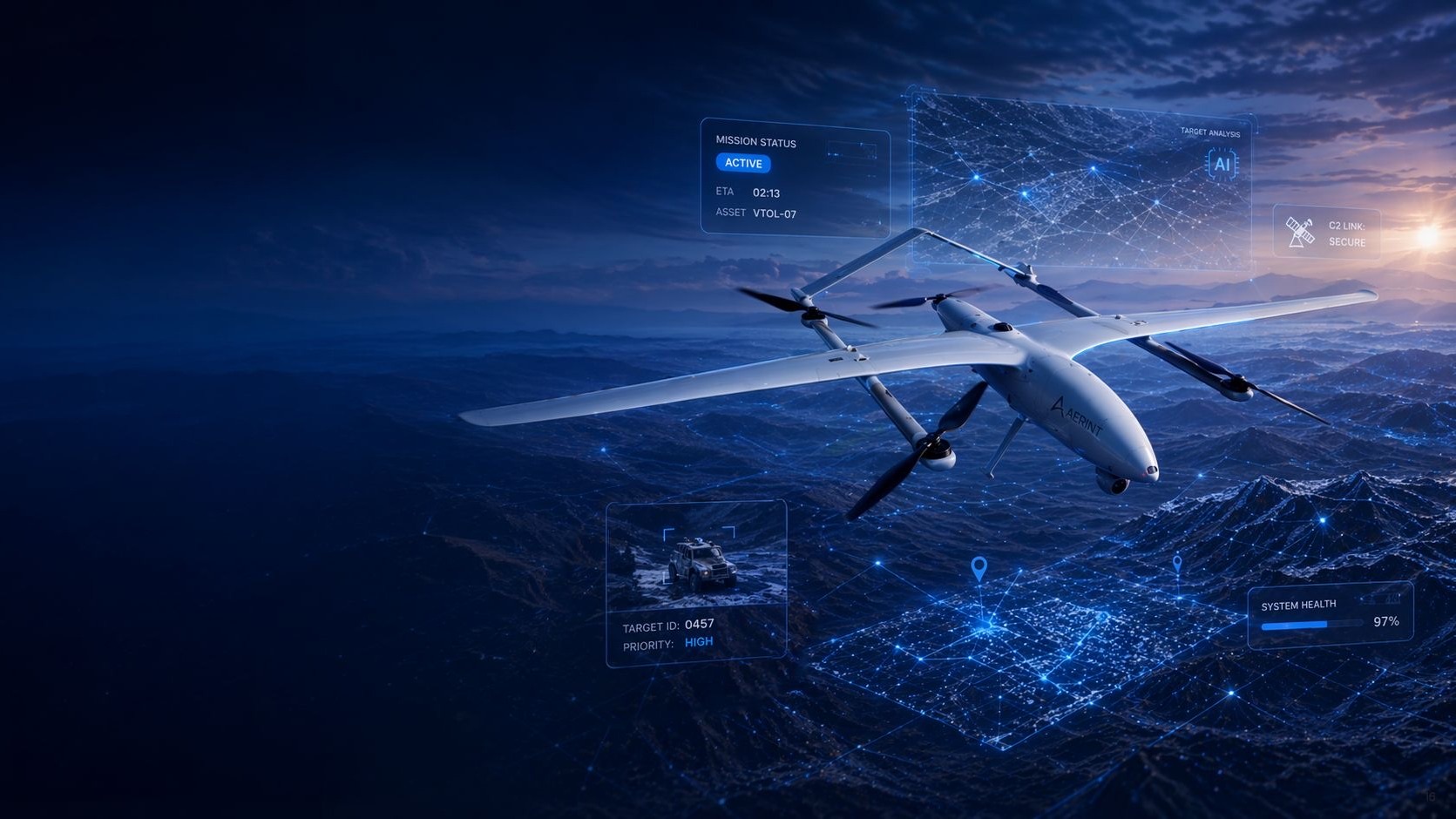
Fully autonomous.
GPS‑independent.
Operated by a crew of two.
No pilot in the loop. No satellite dependency. A full system, three aircraft and a ground control station, fielded by two operators. Combat-proven with defense organizations.
- Range
- 100 km
- Endurance
- up to 3 h
- Payload
- 5 kg
- Operating crew
- 2
- Missions
- 500+
- Success rate
- 100%
The battlefield has changed. The VTOL segment has not caught up.
Today's tactical VTOLs were designed for a GPS-reliable, low-attrition world. That world is gone.
Electronic warfare is now standard
Jamming and spoofing are no longer edge cases. They are the baseline condition of every contested mission.
GPS is no longer reliable
Satellite navigation degrades or fails exactly where it is needed most. Systems that depend on it fail with it.
Attrition rates are at an all-time high
Aircraft are consumed at a rate legacy programs never planned for. Platforms too expensive to lose cannot be fielded at scale.
Speed, autonomy and scale decide outcomes
The side that deploys more capable aircraft, faster, with fewer trained operators, sets the tempo.
A segment built on exquisite platforms cannot fight an attrition war.
Autonomous VTOL, redefined.
Three design decisions, made from day one, that legacy platforms cannot retrofit.
Fully autonomous
Takeoff, navigation, mission and landing with no pilot in the loop. A crew of two fields and operates the full system.
GPS-independent
Vision-based navigation fused with inertial sensing. Full mission continuity under jamming and spoofing.
Robust & producible
Modular architecture that is simple to build, simple to sustain in the field and produced at rate, so systems are delivered fast.
Autonomy puts a full system in the hands of two operators. Robust design makes scale possible. Together: the only VTOL built for attrition warfare.
One architecture. One production line.
Shared autonomy stack, shared C2, shared production. Modular platforms for diverse mission profiles.
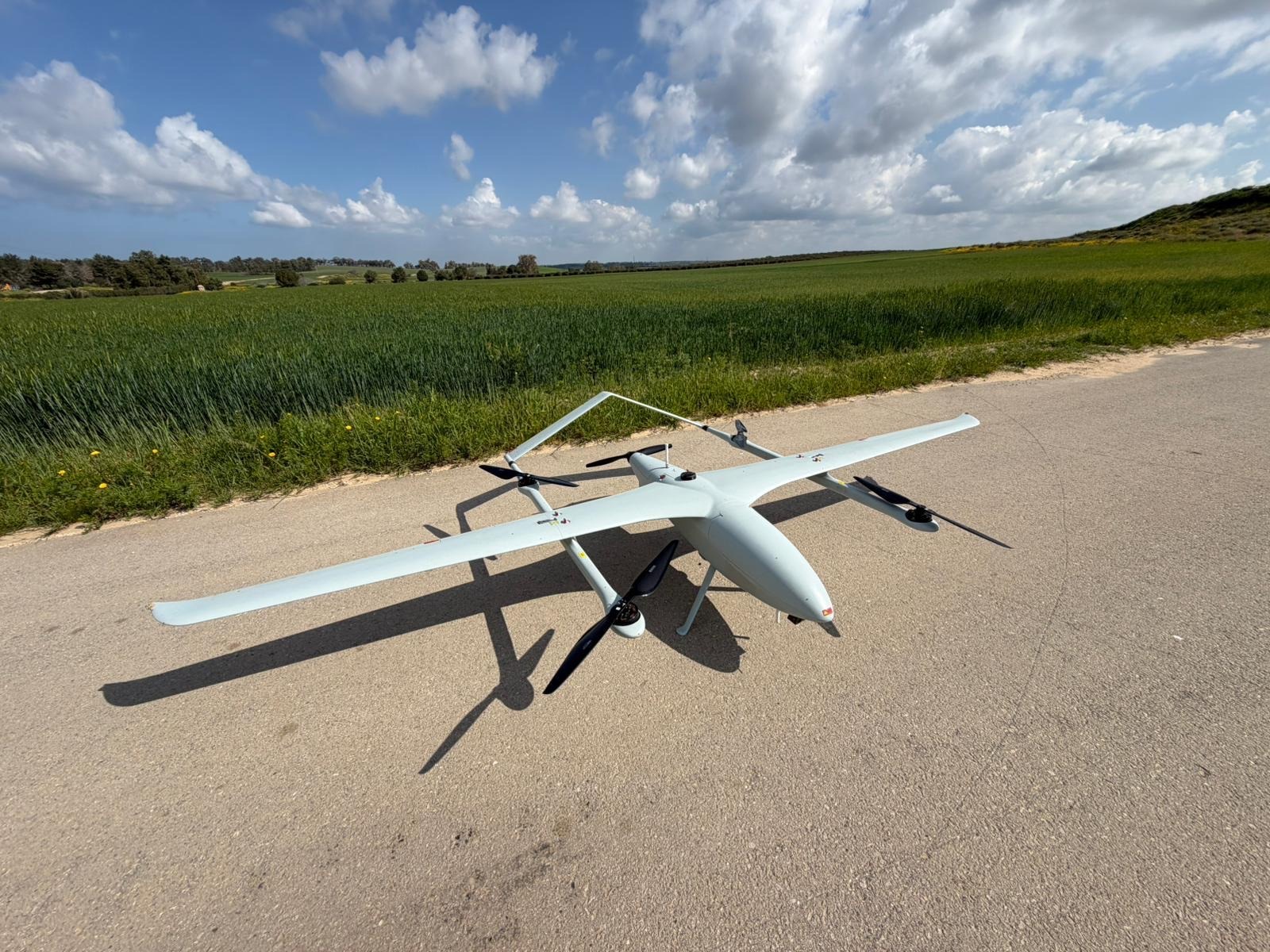
G770
Electric long-endurance VTOL- Range
- 100 km
- Endurance
- up to 3 h
- Payload
- 5 kg
- Navigation
- GPS-independent
- Operation
- Fully autonomous
- Operating crew
- 2
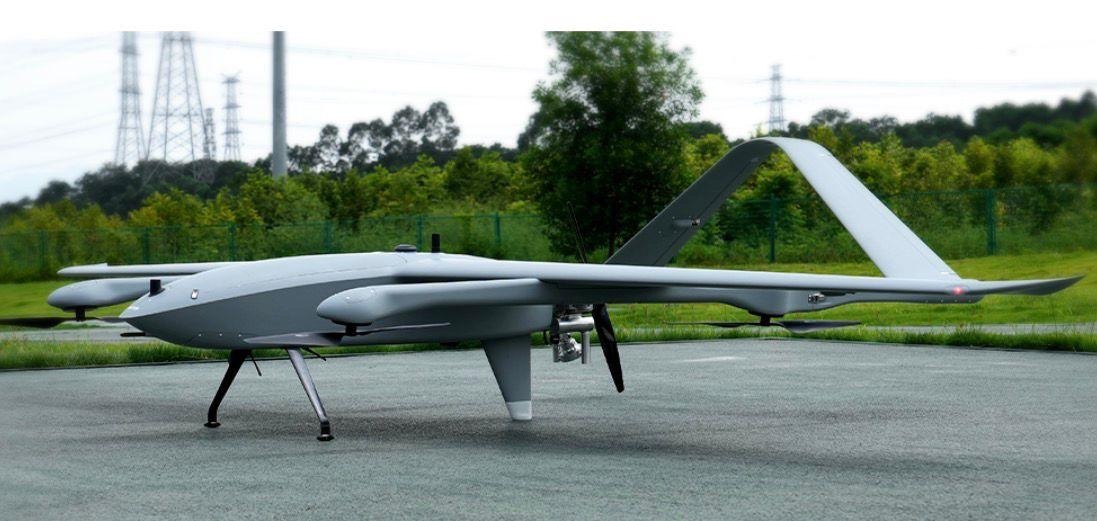
J613
Hybrid long-endurance VTOL- Endurance
- up to 10 h
- Payload
- 15 kg
- Propulsion
- Hybrid
- Autonomy
- Same stack & C2
- Navigation
- GPS-independent
- Operating crew
- 2
3 aircraft + ground control station
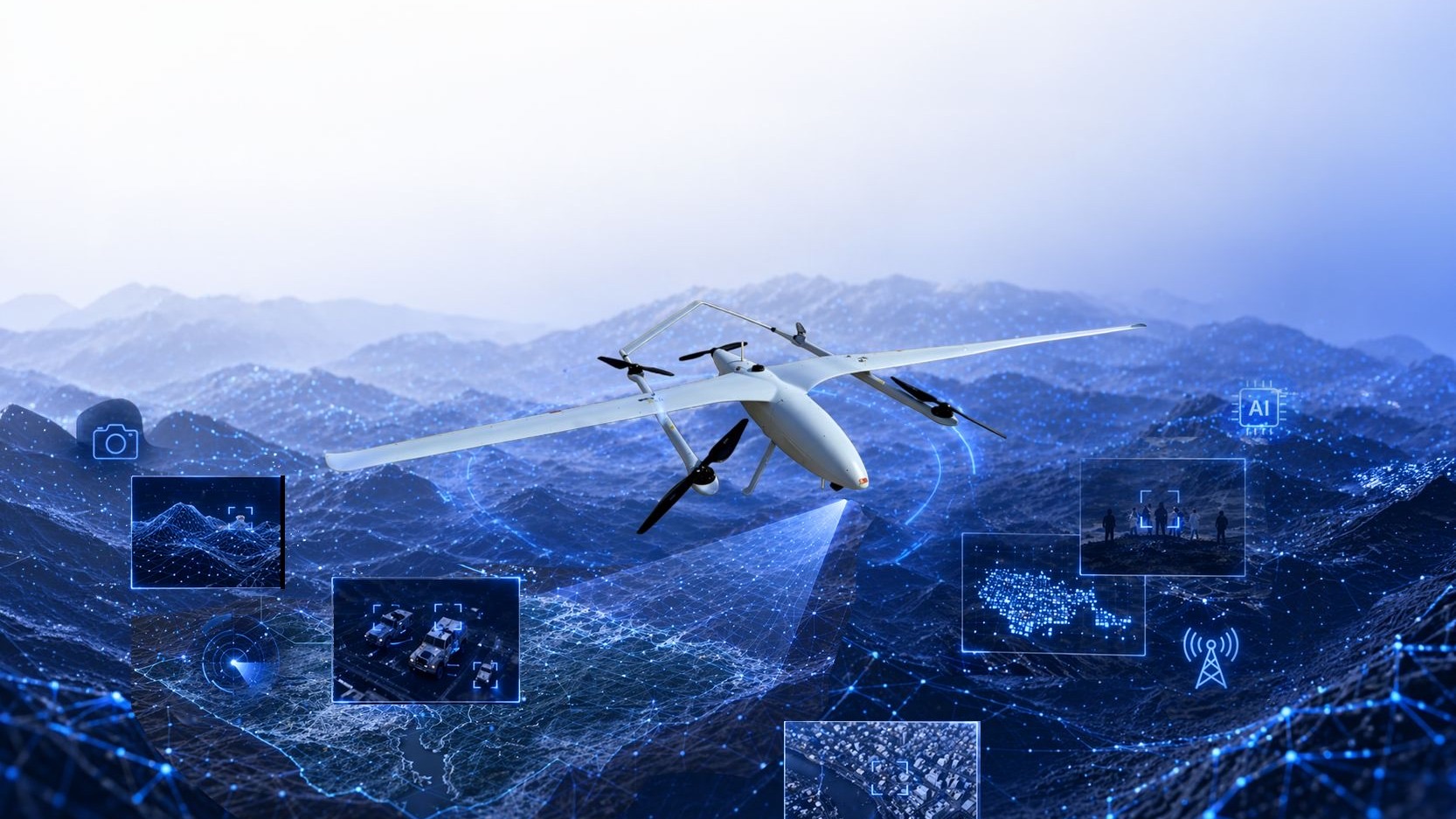
Intelligence onboard. Not in the ground station.
Fully autonomous means no GPS and no pilot, from takeoff to landing. The aircraft carries the mission.
GNSS-denied navigation
Vision-based navigation fused with inertial sensing. No satellite dependency at any phase of flight.
End-to-end mission execution
Takeoff, route, mission and landing executed onboard. The aircraft completes the mission, not the operator.
Real-time adaptability
Onboard intelligence adapts to contested environments as they change, without a link to the ground.
Proprietary end-to-end C2
A command and control layer built for the platform, from single-aircraft tasking to fleet-scale operations.
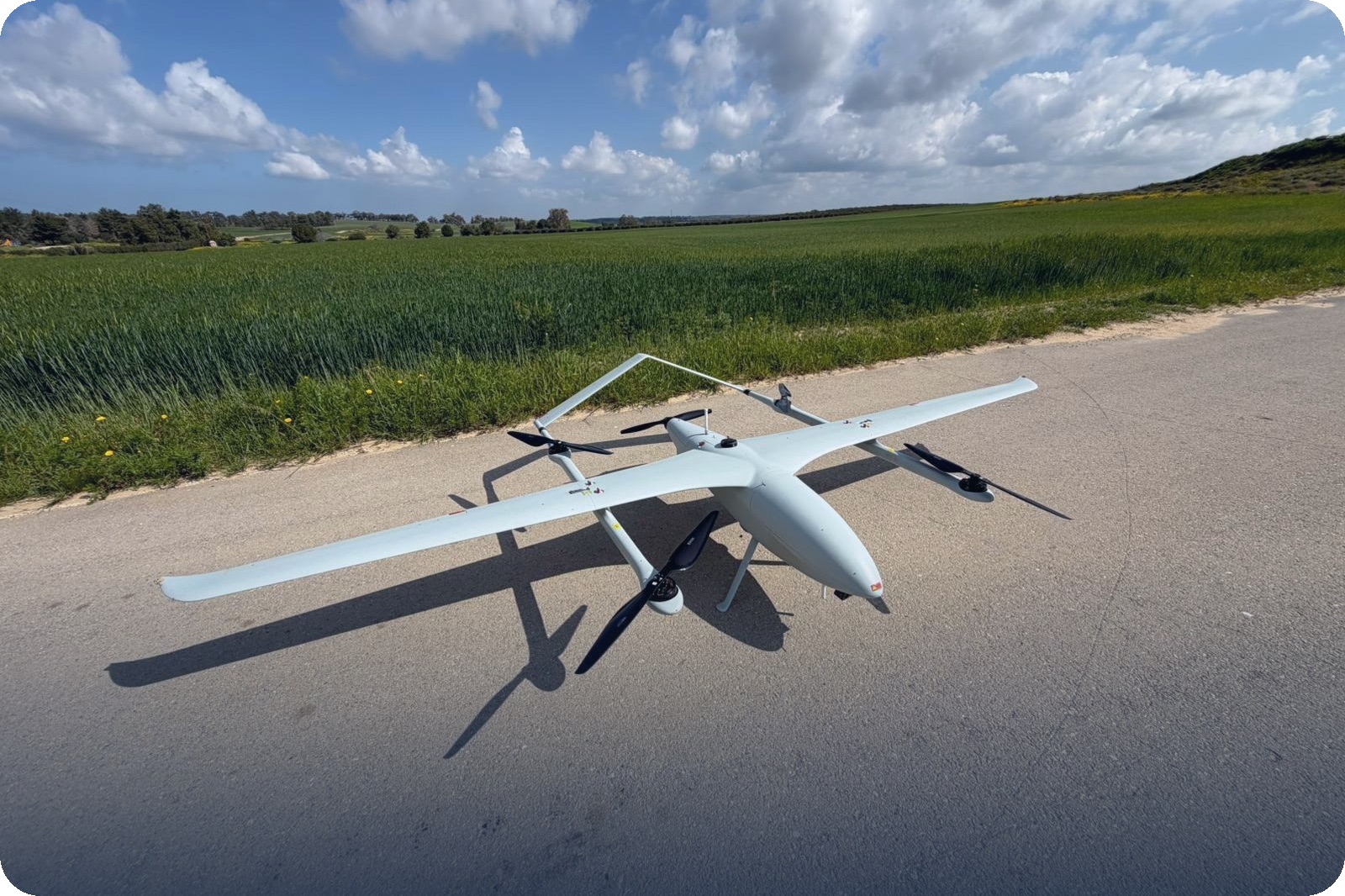
Built for attrition warfare, not legacy doctrine.
Incumbent tactical VTOLs remain remotely piloted and GPS-dependent. AERINT was designed for the environment they were not.
| Capability | AERINT | Incumbent tactical VTOLs |
|---|---|---|
| GPS-independent navigation | Full mission continuity | Partial / assisted |
| Autonomy | Full — takeoff to landing | Remotely piloted |
| Operating crew | Two operators, soldier-level | Expert aircrew required |
| Production | Produced at rate, replicable | Low — hand-built |
| Cost vs. attrition | Designed to be fielded at scale | Too expensive to lose |
A full system. A crew of two.
Three aircraft and a ground control station, fielded and operated by two people. No pilot, no expert aircrew, no specialist ground crew.
Soldier-level operation
Operators define the mission. The aircraft flies it, from takeoff to landing.
One ground control station
Plan, launch and monitor every aircraft in the system from a single station.
Multi-aircraft operations
One crew, several aircraft. Onboard autonomy carries the workload a ground station cannot.
A modular architecture built for high-rate production. Systems are replicated on a production line, not hand-built, so delivery keeps pace with demand.
See the platform operate where GPS fails.
Briefings and live demonstrations for defense, security and intelligence organizations.